Alstom in Italy

Contact details of other offices in Italy
Bari - 0039 (0)80 9198271
Bologna - 0039 (0)51 0464900
Florence - 0039 (0)55 42 341
Rome - Via Nomentana 183, 00161 Rome
Valmadrera - 0039 (0)3411812400
Nola - 0039 (0)8131190160
Sesto San Giovanni - 0039 (0)2 2219640
Vado Ligure - 0039 (0)19 28901
A leader in the mobility sector
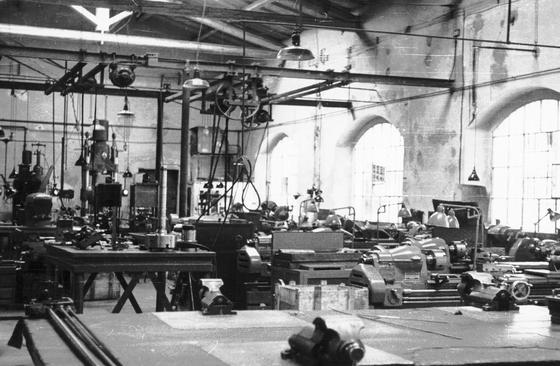
With over 170 years of industrial history in the country, Alstom makes a decisive contribution to the development of the Italian railway system, producing trains, signalling systems, state-of-the-art traction technologies, infrastructure, turnkey transport systems and maintenance services.
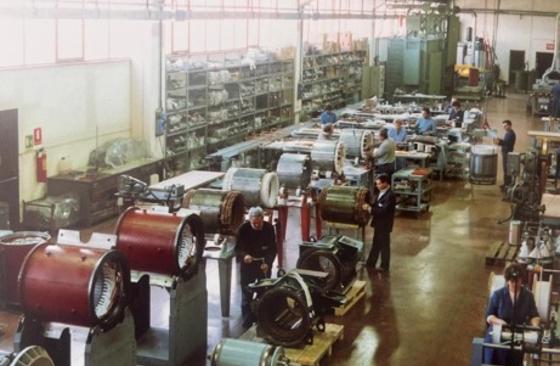
Today Alstom is present throughout Italy with 9 sites, including 2 global centres of excellence (Savigliano for high-speed trains and Bologna for signalling systems), more than 40 depots and over 4,300 employees. Alstom is constantly committed to enhancing the industrial ecosystem, fostering the development of local talent and skills, collaborating with more than 1,500 Italian suppliers, numerous universities and technical institutes, and promoting the training and employment of young people.
Alstom's vision is to lead the transition to more sustainable and intelligent mobility and its mission is based on safe and efficient transport solutions with a strong commitment to the environment and social responsibility. In fact, Alstom uses 100% renewable electricity, designs 96% of new products in an environmentally friendly way and intends to reduce carbon dioxide emissions by 40% by 2030.
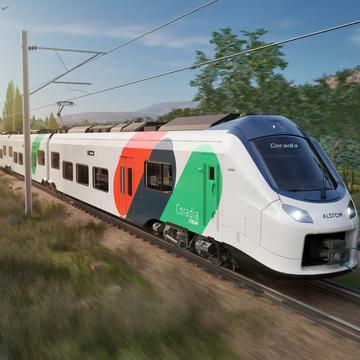
Its flagship technologies include the Coradia Stream H™, Italy's first hydrogen train with no direct CO₂ emissions, and ERTMS signalling systems that will increase rail capacity by up to 40% and improve the operational efficiency of networks by enabling European rail interoperability. These solutions support the country's ecological and digital transition, improving safety, efficiency and travel quality.
The Group enhances Italian excellence in the world, exporting cutting-edge 'made in Italy' technologies to numerous countries. In fact, Alstom Italia is a key player in international projects in Europe, Asia, Africa and Latin America. Through an integrated approach that combines industrial excellence, sustainability and community involvement, and with an economic impact in 2023 of more than €1 billion on Italy's GDP and support for more than 14,000 jobs, Alstom in Italy is an accelerator of professional development and represents a strategic partner and a model of responsible innovation for the mobility of the future.
Major achievements
-
More than 500 Avelia Stream™ (Pendolino) built in Italy and sold in 13 countries
-
More than 700 regional trains (Coradia Stream™ and others)
-
More than 250 Traxx Universal™
-
ERTMS Level 2 system for Italian high-speed lines and ERTMS on regional lines and Italian and foreign routes
-
Interlocking system in more than 200 Italian railway stations
-
Traffic Management System (TMS) in some of the main Italian and European hubs and lines
-
Electrification and power supply systems for part of the Italian high-speed, regional and main lines
-
Equipment, electrification, TLC and signalling of the main Italian tram lines
-
Automatic People Mover RM Fiumicino Airport
Corporate Social Responsibility
Alstom in Italy is committed to initiatives aimed to support its employees, local communities, the environment and academia.
Find out more below and visit the Alstom Foundation page here.

-
4,300+employees
-
9sites
-
40+depots
-
2global competence centres
Some of our main solutions

-
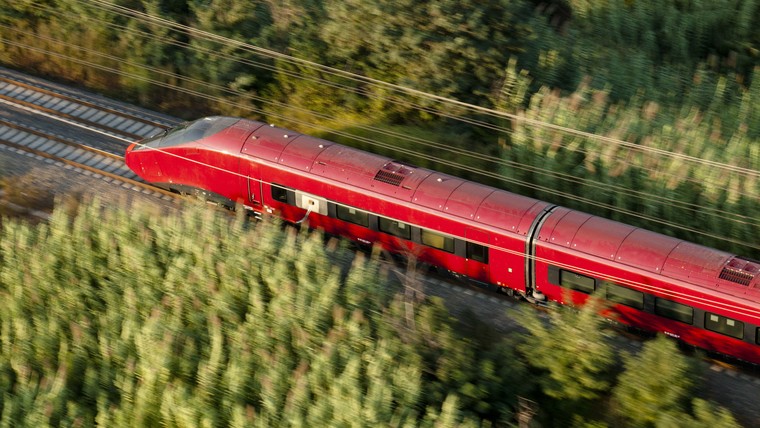
High-speed trains
AGV trains, Avelia Stream™ Pendolino EVO and Avelia Stream™ 300
-
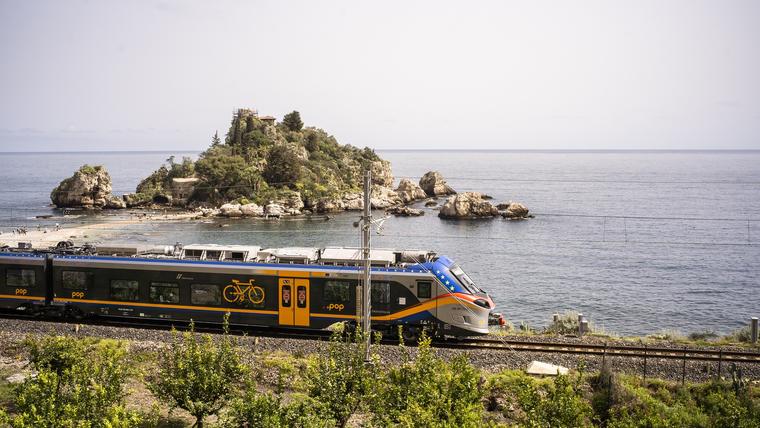
Regional trains
Coradia Stream H™ hydrogen trains, over 160 Coradia Meridian (Jazz) regional trains, over 400 Coradia Stream™ (Pop - Donizetti) regional trains
-
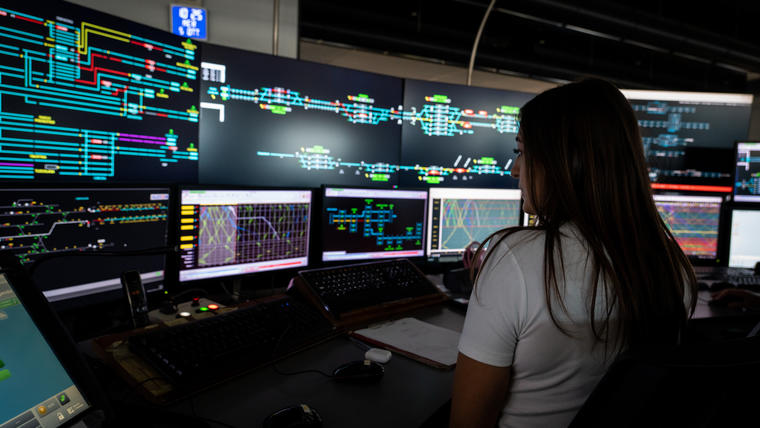
Signalling systems (Italy)
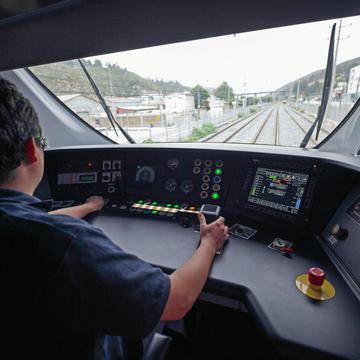
Technology upgrade for Trenitalia, Mercitalia, NTV and other operators on SCMT on-board subsystems to ERTMS L2 BL3 for freight, regional, intercity and high-speed trains.
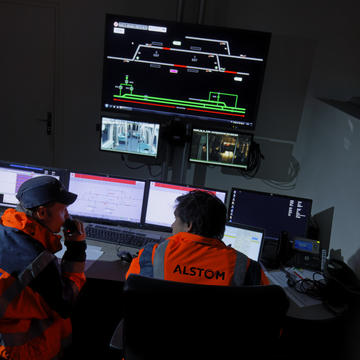
Infrastructural interventions for RFI and Regional Railways with ERTMS L1/L2 distancing systems, ACCM, TMS, GSM-R equipment and track products (eurobalises, shunting boxes, hydraulic systems, axle counters) as part of the ERTMS National Plan and PNRR, on lines in Sardinia, Puglia, Campania, Umbria, Lazio, Abruzzo and Sicily.
New ACCM, TMS, ERTMS, electrical substations and traction equipment for the modernisation of the Circumvesuviana.
Continuous upgrades with about 150 interventions per year on ACCM, SCMT, TMS and ERTMS to ensure functional and technological evolution. -
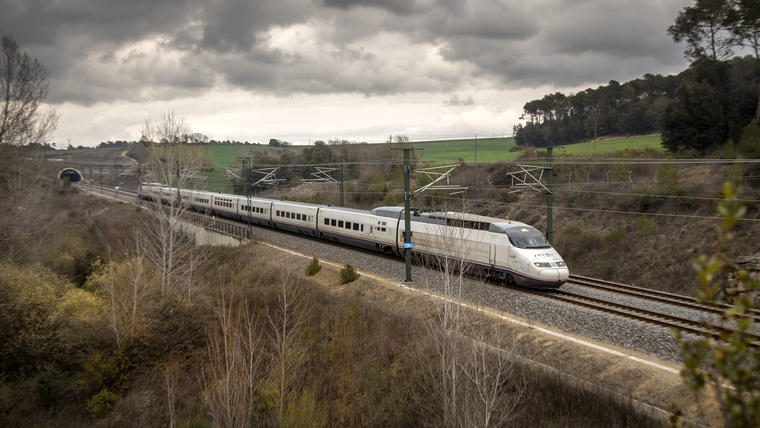
Signalling systems (Abroad)
Switzerland: upgrade of SBB's ETR610 Pendolini trains to ERTMS BL3.
Istanbul (Turkey) and Rotterdam (Netherlands): fixed-block signalling systems with ATP implemented using audio-frequency track circuits on metro lines.
Algeria, Bulgaria, Morocco, Romania, Croatia, Egypt, Tanzania, Greece, India and Denmark: implementation of signalling systems with IXL, TMS, ERTMS Level 1 and Level 2 on national railway lines.
Worldwide: supply of railway line yard products: shunting boxes and train presence detection systems, such as track circuits and axle counters.
-
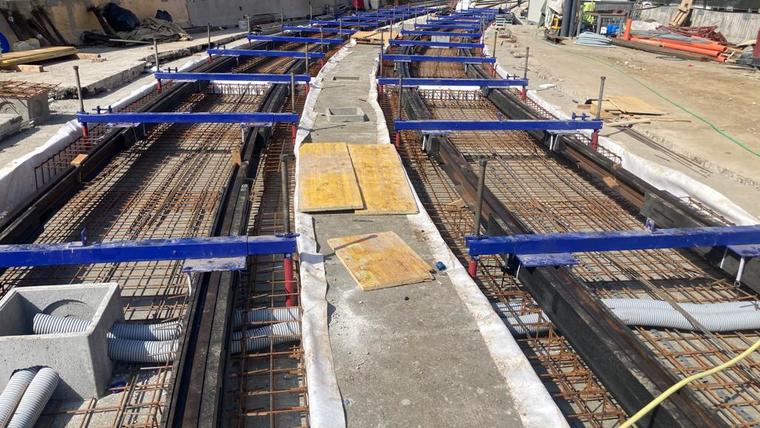
Systems and Infrastructure
Florence tramway (new lines 2 and 3.2, line 4): track equipment, catenary, substations and lighting system
Bologna tramway: track equipment, catenary, substations, power supply, traffic lights, TLC, signalling
Brescia tramway: track equipment, catenary, substations, power supply, traffic lights, TLC, signalling
Turin Metro L1: CBTC system on existing line and trains and new sections and supply of new automatic metro trains
Milan-Genoa, Brescia-Verona and Verona-Vicenza high-speed lines
RFI: AQ for catenary renewal, SSE, yard signalling -
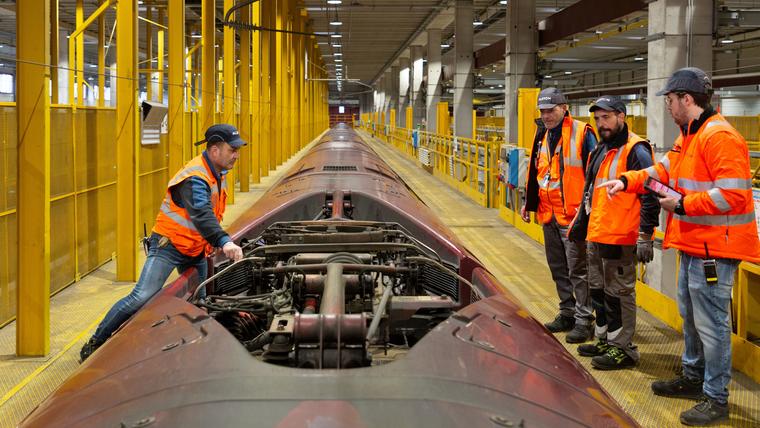
Maintenance services
Preventive and corrective maintenance of Trenitalia's Minuetto and Pendolino fleets
Material logistics service (Full Material Management) for Trenitalia's Pop trains
30-year full maintenance service (preventive/corrective and major maintenance) for Italo fleets
Full Maintenance Service (preventive/corrective and major maintenance) for cargo locomotives of Mercitalia and other operators
Joint Venture with Trenord for Full Service maintenance on the client's entire Alstom fleet
-
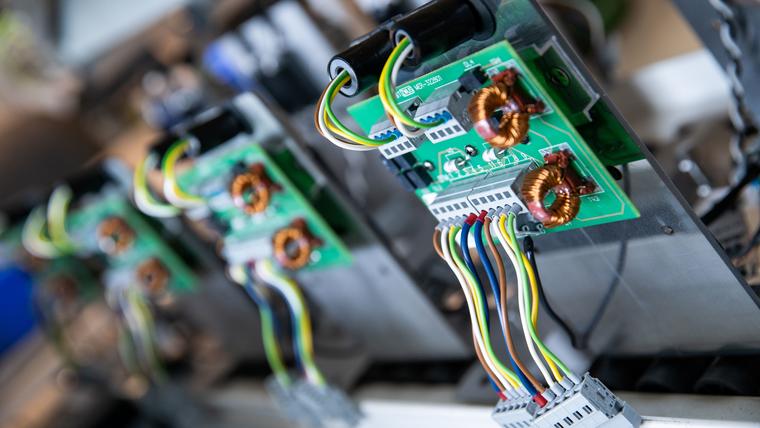
Components
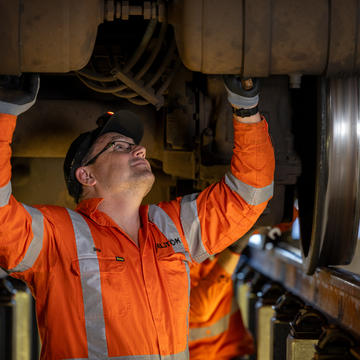
Traction systems for trams, metros, Pendolini and regional trains; auxiliary converters, fire extinguishing systems, battery chargers, TCMS, switchboards for Pendolini and regional trains.
-
 Press Releases
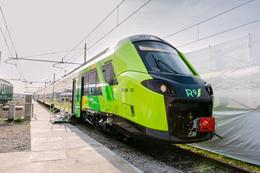
Trenitalia and Alstom unveil the new regional train at 200 km/h at EXPO Ferroviaria 2025
-
 Press Releases
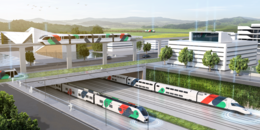
Alstom at Expo Ferroviaria 2025: innovation for a smarter and more sustainable mobility of the future
-
 Press Releases
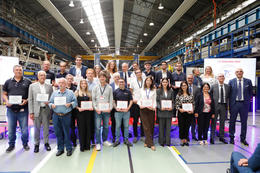
Alstom celebrates 70 years of its Sesto San Giovanni site and announces 100 job openings in the Services business in Italy
-
eaed.jpg?itok=pHE8BAQW) Press Releases
Press ReleasesMetro line 1: First new Alstom train delivered to Collegno depot
-
4aca.jpg?itok=o0ABG-eb) Press Releases
Press ReleasesBrescia Mobility entrusts Manelli, Hitachi Rail and Alstom with the construction of the city's new tramway streetcar line
-
88c7.jpg?itok=oUTRuS-v) Press Releases
Press ReleasesAlstom opens the doors of its 9 Italian sites for a journey to discover the company with the initiative “Ti presento Alstom”
-
 Press Releases
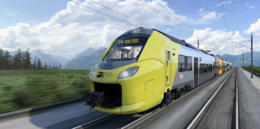
Alstom and STA unveil the first of 21 Coradia Stream trains for the new regional fleet connecting South Tyrol (Italy) and Tyrol (Austria)
-
65cb.jpg?itok=BhFZ3cxf) Press Releases
Press ReleasesAlstom signs contract with RESA Yapi Elektromekanik A.S. to supply the first Rigid Overhead Catenary System for Türkiye's new high-speed line
Working at Alstom in Italy
Funds and financing
-
SIS-LR project
The objective of the SIS-LR project is to identify an innovative solution that allows ERTMS systems to be implemented on regional lines with little traffic with low initial investment and operating costs, making them economically viable and competitive with road transport.
The main results achieved by the project are:
- New "Train Location" functions with the use of GNSS technology (GPS, Galileo, ...) and "Train Integrity" control, with the elimination of ground-based Train Detection systems (Track Circuits, Axle Counters, level crossing pedals) and physical train tracking buoys.
- Ground-to-board communication over public LTE/5G networks via APNs, as an alternative to the proprietary GSM-R network.
- Entity controllers with management capability in fault conditions or isolation from the IXL Central Computer, with "cybersecurity" functions for communication on public LTE/5G networks through APN networks, as an alternative to proprietary fibre-optic network.
These results are the first application in the railway environment - with a safety objective (SIL 4) - of similar solutions used in other areas but with less stringent safety objectives, or postulated but so far not implemented.
With the financial support of the European Union - ERDF, PON Enterprise and Competitiveness 2014-2020 for an amount exceeding EUR 500,000.00.
-
Coradia Stream H hydrogen train project

With a strong commitment to the decarbonisation of Italian rail transport, Alstom designs and builds advanced technologies to make increasingly high-performance and sustainable train fleets available to operators.
With this in mind, Alstom has launched the Hydrogen Green Mobility for Railway project in Italy, focused on the development, construction and marketing of next-generation hydrogen and hybrid (hydrogen + electric) trains.
For the realisation of the project, Alstom Ferroviaria SpA has been awarded a grant, issued by the Ministry of Enterprise and Made in Italy, under the IPCEI Hydrogen 1 Hy2tech Fund amounting to € 98,653,026.00 (Project ID: IPCEI-I1_0000003 CUP: B19J23000490004).
The Alstom project includes three main steps:
- Regional Train Step 1, focused on the design and development of a new generation of hydrogen-powered trains characterised by the innovative Power Car concept. This phase foresees the creation of a set of prototype trains validating the Research, Development and Innovation phase and a set of trains validating the First Industrial Application phase realised with the aim of allowing validation by an external operator (Ferrovie Nord Milano) through testing on a real railway line (Brescia-Iseo-Edolo).
- Regional Train Step 2, focused on the design and development of a new generation of hydrogen-powered trains integrating improved components in terms of durability and performance, such as, in particular, traction batteries and fuel cells, integrating technological developments achieved by the other streams of the IPCEI Hy2Tech programme (Technical Field 2).
- Bi-Modal Regional Train, focused on the design and development of a new generation of bi-modal trains (hydrogen + electric), integrating the new-generation components developed in the previous phase with catenary, allowing them to operate on electrified lines.