70 years of the Alstom site at Sesto San Giovanni

From mechanical innovation to smart mobility
To mark the 70th anniversary of the Sesto San Giovanni site, Alstom celebrated this centre of excellence for the production, repair and maintenance of subsystems and components for rolling stock, with the exhibition “70 years of traction towards the future. From mechanical innovation to smart mobility”.

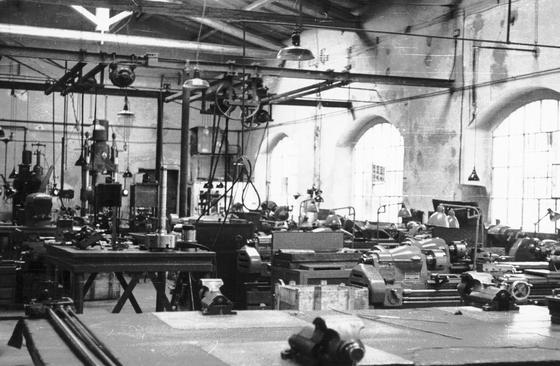
The exhibition recounts and interweaves the history and innovations that have marked the industrial evolution of the Site, starting from 1955, the year in which the historic “Elettromeccanica Parizzi Spa” was founded, through a selection of photographs, objects and historical components, witness to the Site's ability to anticipate the times and contribute to the progress of the railway sector. From converters to traction systems to subsystems, railway components are the beating heart of the Site's industrial innovation that, phase after phase, recount not only technical progress, but also the site's strategic role in the development of cutting-edge solutions, in Italy and worldwide.
"70 years of traction towards the future" is a tribute to all the people who, with skill and passion, have made this journey of growth possible. A journey through past and present, with an eye always on the future, the “traction motor” of mobility and the territory.
The exhibition represents the first phase of a broader exhibition project that will come to life in 2026, with the aim of divulging, raising awareness and bringing more and more people - especially the youngest - closer to industrial history, technological innovation and the opportunities offered by the railway world.
“Many start. Not everyone succeeds. My project has always been to build ahead, to study today to be ready tomorrow, to make money to reinvest in the company, to produce quality to solve problems.”
1955–1971
In 1955 Eugenio Parizzi, a brilliant Milanese electrotechnician, founded Elettromeccanica Parizzi SpA, transforming a cellar into a laboratory of innovation where, with vision and pioneering spirit, electropneumatic valves and servocontrols were designed. Shortly afterwards, the company moved to new premises, marking the beginning of an expansion phase: it supplied electrical equipment for railcars destined for the Italian State Railways and foreign operators, and entered the electric traction sector with the ETR250 “Arlecchino”, built for the Olympics.
The 1960s represented a turning point: the company embraced power and signal electronics, developing servomechanisms, converters and devices for railway safety, such as the flashing train tail light. S.A.R.E., the advanced core of electronic design, was born, leading the evolution towards software and the use of microprocessors, and where cutting-edge solutions such as the electronic anti-skid, the chopper for forklift trucks and the anti-skid for locomotives were developed, contributing to the development of fundamental technologies for train safety and efficiency.

1972–1988
The growth of the railway sector and the introduction of increasingly advanced and comfortable trains mark the rise of electronics, which will completely revolutionise the entire sector, opening up complex challenges that the company faces with determination. A flourishing phase begins, accompanied by an expansion of personnel, skills and the increasingly central role of the design laboratory, the beating heart of technological innovation, in parallel with the construction of a large new headquarters in Bresso. Products were developed such as 65kVA static converters and contact line chargers, fundamental for new on-board services, traction inverters for locomotives and subways, uninterruptible power supplies for telecommunications and Mobile Power Stations for the military sector, Locopar and Memocard, forerunners of modern black boxes.
In 1983, part of the company was sold to Fiat Ferroviaria, realising the need to strengthen the corporate structure in order to face future challenges in the sector.

1989-1995
With Fiat Ferroviaria's entry as majority shareholder in 1989, the ETR460 Pendolino project took shape, a symbol of Italian technological excellence and innovation that marked a historic turning point for the company thanks to its ability to drastically reduce journey times through active tilting technology. The R&D team works on a traction chain with asynchronous motors and microprocessors, Freon cooling and innovative power modules: the train is delivered in 1994, becoming a technological paradigm in Europe.
The traction system, which can be adapted to different voltages, opens up new markets and consolidates the company's international reputation. At the same time, Parizzi developed other outstanding inventions, such as the low-floor tram wheel, the Downtown electric car (presented in Geneva in 1993) and the VAL208, the first automatic metro, co-designed with Matra. With new resources and collaborations, Parizzi continues its journey as a leading player in European railway innovation.

1996–2010
which stands out for its comfort, safety and speed, equipped with advanced technical solutions such as active suspension, distributed engines, integrated bogies, electronic control systems and advanced diagnostics.
The Pendolino expands throughout Europe and variants for non-electrified lines, multi-system to connect Italy and Switzerland and versions prepared for the new Italian High Speed (HS) lines are born.
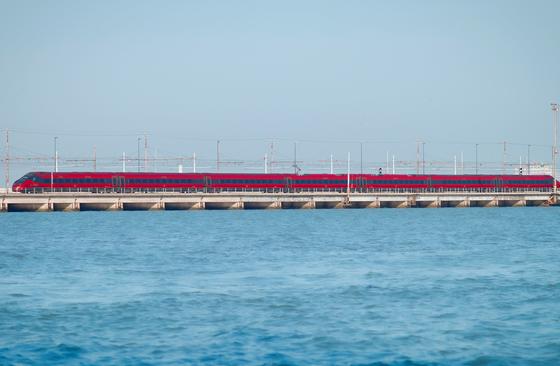
The company continues to play a strategic role in technological development, supplying static converters, auxiliary systems, axle generators and advanced anti-skid solutions. In 1996, it moved to its current location in Sesto San Giovanni and in 2000 Alstom acquired Fiat Ferroviaria. Immediately, skills, organisation and tools were enhanced: in 2007 the site was recognised as a Centre of Excellence for traction systems. The following year it took part in the production of the AGV/Italo high-speed train for NTV, and the "Train Life Services" repair centre was set up, a fundamental hub for the maintenance and repair of components and products, synonymous with reliability and quality of service.

2011-2025

The fervent momentum in the railway sector and the establishment of the repair centre at the Sesto San Giovanni site lead to a growing demand for after-sales services, such as preventive and corrective maintenance, technology upgrades and train lifecycle management.
Since 2014, a modern Control Room has been monitoring in real time over 300,000 files per day from more than 500 trains in service - including high-speed, regional and locomotives. Using predictive maintenance (CBM), it analyses performance, wear and tear and environmental conditions, generating automatic alerts that optimise time, resources and planning.
For this, it received recognition at the Assolombarda Awards in the “Digitisation” category in 2025.
Thanks to the skills of more than 300 people and international synergies, the plant has established itself as the group's centre of excellence for the production, maintenance, overhaul and repair of railway subsystems and components, including traction and auxiliary converters, shunting benches, fire-fighting and electronic systems, and subsystems for high-speed trains, regional trains, trams and metros. Every year, more than 1,500 components are manufactured and more than 12,000 spare parts and repairs are handled, serving Product Line Services on a Milan, Lombardy and national scale, thanks to a network of dedicated depots.