Commitments
Local Communities

A global player committed to local communities
Alstom offers a full portfolio of solutions adapted to the cities, countries and regions that it serves. In doing so, the company, whilst being a global player, seeks to develop a strong local presence. This reflects in its engagement with local communities: to have a positive impact, nurture good relationships and demonstrate long-term commitment.
Alstom in the community
Alstom’s Community Investment Policy focuses on 4 priorities:
- Meeting social needs through collection and donations of cash and goods, and volunteering
- Supporting education through partnerships with schools and universities
- Cultivating local enterprises through partnerships with local research centres and supporting local supply chains and start-ups
- Protecting the environment through cleaning places, planting trees and acting towards biodiversity and climate
Alstom’s local community activities are performed under the banner of “Alstom in the Community” with 2 frameworks.
- The Alstom Foundation: a philanthropic organisation which finances local community-related projects around the world that are implemented by expert NGO partners.
- The Country Community Action Plans (CCAPs), developed each year, for the application of the Company’s Community Investment policy in all countries where Alstom has a significant presence.
-
370Kbeneficiaries in 2024/25
-
44CCAPs
-
366Foundation projects supported since 2007, including 33 selected in 2024/2025
The Alstom Foundation, giving back to our communities
Established in 2007, the Alstom Foundation focuses on 4 key areas:
- Economic and social development
- Environmental protection
- Access to mobility
- Access to energy and water
In 2024, it was decided to refine the economic and social development axis as follows:
- Skill development and employability for disadvantaged youth and women
- Support for street children, orphans and foster children
The Alstom Foundation only supports projects submitted by Alstom employees. All are conducted in strong partnership with local or global NGOs with a proven ability to implement the projects on the ground.
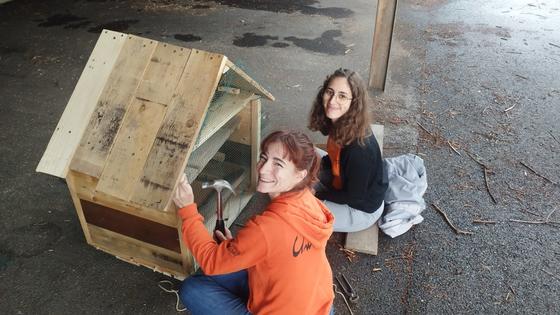
The Alstom Foundation partnered with Unis-Cité to meet the expectations of youth to take action for the environment. This 12-month programme allows youth (aged 16-25) to commit to missions focused on the environment, and take part in concrete actions to fight against the decline in biodiversity. The project aims to enable youth to become better aware of ecological issues and the environment, foster civic service skillsets, and strengthen the impact of environmental associations.
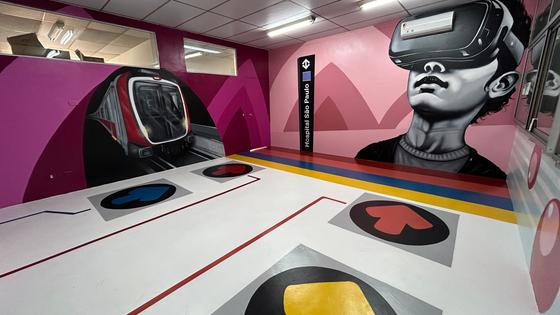
The Alstom Foundation partnered with the NGO, Instituto Jo Clemente, to address the challenges and barriers faced by disabled individuals through a virtual environment that simulates the reality they experience. With the 'Virtual reality for inclusion' project in Brazil, disabled individuals could train and develop specific skills related to urban mobility to better prepare them for the job market.
The country community action plans (CCAPs)
Apart from the Foundation, Alstom also encourages local initiatives and volunteering through the Country Community Action Plans. While the Foundation follows a complex annual selection process at central level, the CCAPs are under the responsibility of local management in each country, ensuring quick responses to the possible multiple requests. Typical actions range from charity donations, fundraising and volunteering to the sharing of expertise (STEM – science, technology, engineering, mathematics) in schools and universities or general support to local projects.
Responding to local social needs
Alstom seeks to make a positive impact on disadvantaged local communities, improving their living conditions and their socio-economic standing through pragmatic dialogue, by encouraging employee awareness and employee involvement in various volunteering and charitable activities, and by allowing the use of company property or by giving employees the time to participate.
Alstom’s employees get involved in fund-raising events such as charity runs, bike race, walks or sale of products. But overall, Alstom addresses social needs through its support to charities and through community project support.
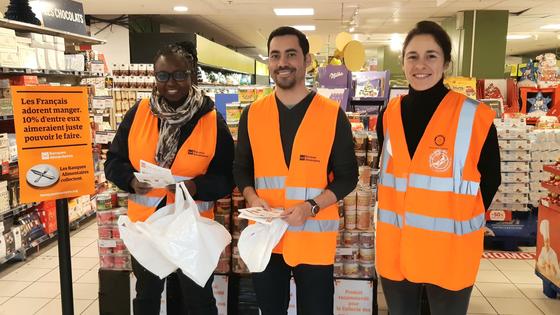
Examples of charitable support:
- In France, Alstom employees in Saint Ouen participated in a national food collection organised by Banque Alimentaire of Paris and Île-de-France, supporting people in need.
- In Canada, a 50,000 CAD donation was made to the Montreal Children Hospital Foundation to support the implementation of a multicultural clinic.
- In Kazakhstan, Alstom employees ran a marathon for the Heart Center Foundation, to support the development of cardiology & cardiac surgery services.
Supporting development through education
Alstom has apprentice and internship programmes in place in several countries which are often focused on young people from disadvantaged backgrounds.
Mentorship is also a common practice. Alstom has hosted female students at our Riyadh Metro facility to introduce Alstom and expose students to green mobility.
These actions frequently involve partnerships with local institutions, the training of internal mentors, and the development of a training plan. The aim is for apprentices to learn a trade as leverage for future employment – whether in Alstom or elsewhere. Training can be full or part time and of different durations.
In Spain, Alstom volunteers frequently visit schools and classrooms for different interventions: to teach a railway expertise or to present their professional path and support youth career orientation. Academic support is also part of the initiatives. In South Africa, Gibela partnered with Solve 4X to provide extra maths lessons for over 2,000 primary school learners (Grade 4-7) and strengthen their STEM foundations.
Encouraging the development of local enterprises
By providing mobility solutions worldwide, the Group anchors its projects in local economies. Alstom is able to meet local content requirements especially from public procurement policies, to comply with demanding regulations, to respond to localisation conditions from institutions/States/Cities financing the projects, as well as to satisfy growing expectations from its customers and stakeholders on local footprint.
Its contribution to economic and social development includes a wide range of initiatives, such as: employment, trainings, investments at the local level, or collaboration with small, medium and large local companies, start-ups, innovation clusters, associations, universities, inclusive actions, as well as the development of relations with regional economic stakeholders.
Here are a few examples of how we encourage the development of local enterprises:
In Australia, Alstom supported the Queensland Pioneer Steam Railway (QPSR) renovation of 3 vintage locomotives. The goal is to repurpose heritage assets (Circular economy) for tourism, education and community benefits. Activities involved repairing sections of the Swanbank track, rewiring Sunlander carriages, painting exteriors and maintaining historic engines. The locomotives are expected to attract 10,000 visitors per annum, with an average $350 spend per family injected into the local economy.
In Sweden, Alstom continues to foster innovation through Ignite matchmaking network to help start-ups land projects, deals or clients.
Protecting the environment
Several countries organised volunteer days in order to clean places. In Mexico, Alstom employees participated in several beach and mangrove clean-ups in Yucatan.
In Germany, as part of the Bergwaldprojekt, 3,337 trees were planted with Alstom teams from Salzgitter, Hennigsdorf and Berlin.
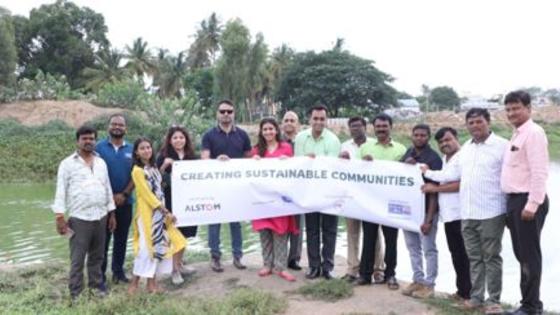
Some countries put in place initiatives to favour recycling. In India, Alstom contributed to a lake rejuvenation allowing for the creation of a water storage potential of 180 million liters and carbon sink potential of 13.85 tons of carbon per year. The whole initiative also supported biodiversity, in particular bird species.
To access our documents related to Local communities